
At Starbucks, I’m Diana.
It’s much easier that way. No pauses, no stumbles, no tilted heads. The barista writes it neatly on the cup and calls it out without hesitation. For years, I preferred it that way. My real name, Dione, was also only five letters, but it felt like a test no one could pass. I grew accustomed to hearing “Di-own” or “Dee-on,” each wrong version scraping away a little more of me. I thought avoiding the corrections made life simpler. But in truth, it made me feel invisible.
Being biracial, African American and Cuban, already made my existence feel like a puzzle with missing pieces. African American peers called me “whitewashed” because I didn’t fit their idea of what Blackness should look or sound like. Cuban relatives said I was “too dark,” their tone making it clear I wasn’t worthy of Cuban culture. I was told my hair was “long for a black girl” by people who thought they were being kind. In spaces where I should have felt accepted, I often felt like an outsider. Colorism and racism were not abstract concepts from history books, They were daily cuts reminding me that parts of me would always be questioned.
So I adapted. I straightened my hair when I wanted to wear it curly. I laughed off jokes that stung. I let people shorten or change my name, hoping it would make me more likable, more acceptable. My name stopped feeling like a part of me and started feeling like an inconvenience. There was a time when I actually wished my name was Diana. I hated who I was.
But as I grew older, I slowly began to accept myself. I embraced my Cuban side through Latin dance classes, letting the music connect me to a culture that I had once not felt worthy enough to even think about. The first time I learned salsa, my hips were stiff with nerves while others moved easily to the beat. But as the percussion deepened, my body loosened. Soon I was spinning across the floor, letting the rhythm guide me. Bachata and rumba followed. Every turn, every sway of my hips peeled back layers of self-doubt and pulled me closer to a part of myself I had buried.
I found my Nigerian side through stories, history, and food. I learned to fry puff-puff until the dough was golden and soft, but the Jollof rice became the heart of it all. I carefully simmered tomatoes, peppers, onions, and spices, just like my father described from his childhood. The pot filled the kitchen with a warm, smoky aroma that wrapped itself around me like a hug. When I finally tasted it, I truly understood that food carried culture. Every bite felt like stepping into something bigger than myself, something that had been waiting for me all along.
Each dance move, each shared meal, each lesson from the past stitched together threads into the fabric of my identity.
The hardest step though, was breaking the psychological barrier of accepting my name. My mother told me that she chose the name “Dione” because it was unique, strong, and beautiful. She loved that it came from Greek mythology, it was the name of a goddess. For so long, I carried my name like a weight, heavy with misunderstanding. Now, I see it for what it really is: a gift. A reminder that my identity is not something to shrink for others’ comfort, it is something to honor.
I still go to Starbucks. But now, when they ask for my name, I smile and say “Dione.” Sometimes they still get it wrong, but that’s okay, because I’ll just tell them again. My name is mine, and so is my identity.
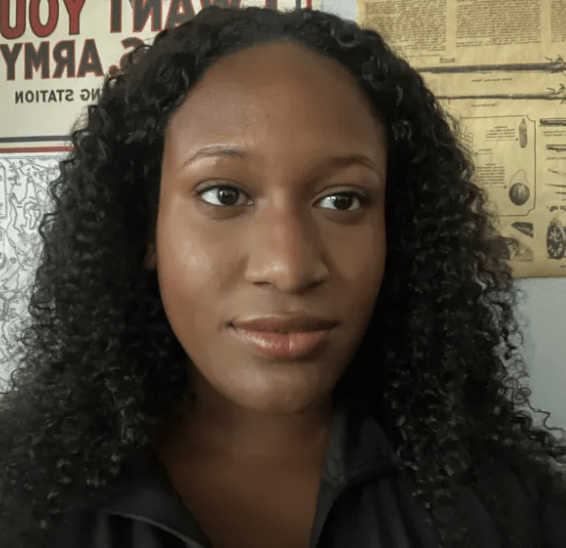
Dione Nwamah is a graduating senior and Creative Writing 3 student from Pembroke Pines Charter High School. Her personal narrative explores her journey toward embracing her Nigerian and Cuban heritage, navigating life as a mixed-race individual, and ultimately learning to love her name. “Dee-oh-nee” won first place in the Personal Narrative category of the 2025-26 PPCHS Literary Fair, and first place in the 2025-26 Broward County Literary Fair.

